1000x faster than human. How AI helps analyze x-rays at scale.
A clinic’s growth exposed a shortage of doctors for X-ray analysis. How AI-powered X-ray classification, 1000x faster than a human, turned that bottleneck into lower costs, better quality, and room to grow.

For any B2C business, customer growth is the dream. A sign that you’re doing the thing right.
But sometimes, success brings its own set of problems. Your systems are stretched. Teams overwhelmed. What once felt like a win begins to feel like a warning.
Story.
In 2021, we partnered with a clinic to create an innovative, AI-powered digital patient management platform.
The platform was a success itself — effective marketing and streamlined user experience led to a significant increase in patient volume. But after some time, the growth exposed a critical vulnerability in the essential business workflow — a shortage of doctors for X-ray analysis…
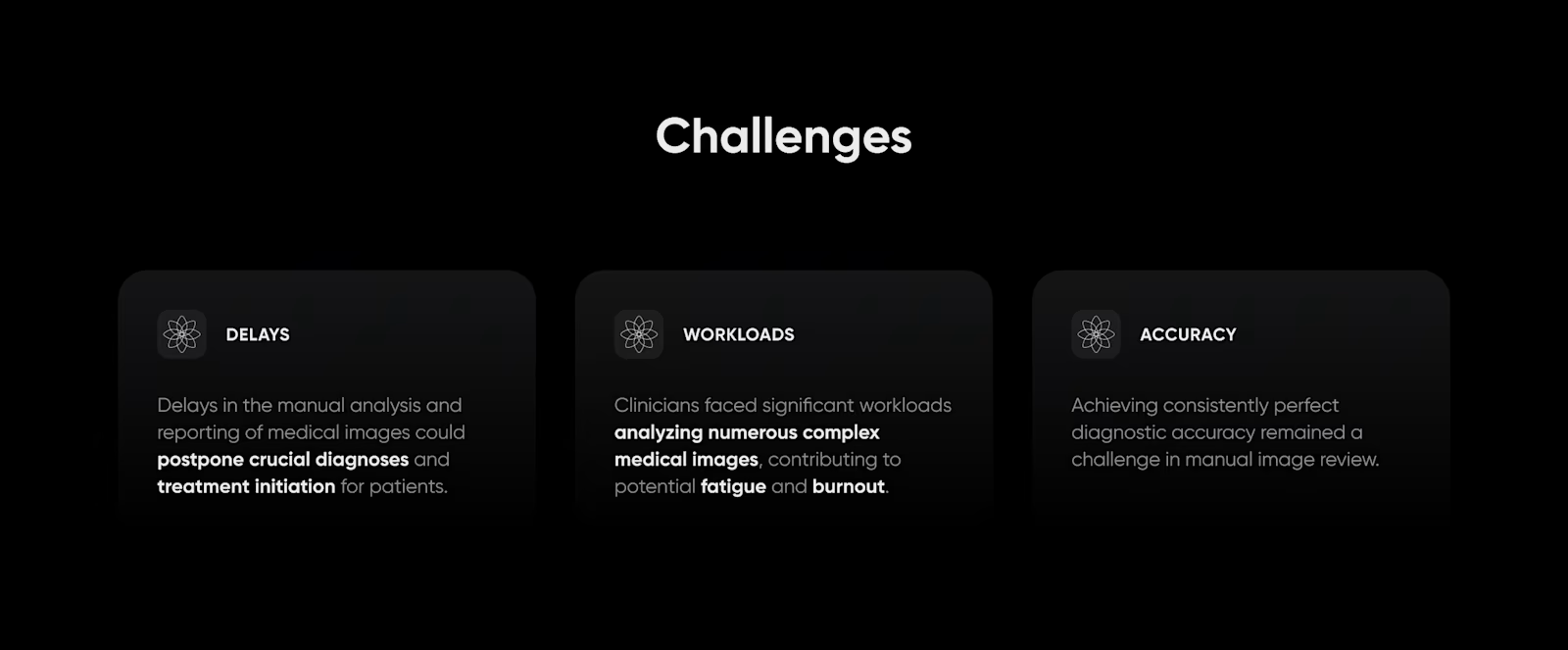
The immediate, conventional solution, you might think, is always to hire more staff. But as you and I both know, it’s not only a slow and expensive process, but also finding top-tier specialists in a competitive market is a challenge in itself. In large cities, you have a maximum of 500 top-tier specialists, and considering distance, location, and competitors, you’ll soon find that they’re all already working for you.
So, how could we amplify the capabilities of the radiologists they already had?
Just like any brilliant idea is simple, the solution was right on the surface — to automate. To automate the most time-consuming part of their workflow: the initial analysis and classification of X-rays using artificial intelligence.
Ideally, this should immediately reduce specialist workloads and eliminate delays, while ensuring consistent, fatigue-proof accuracy.
But before I tell you about the solution and the impact it brought to our visionary partners, it’s worth noting that automation was never meant to replace the expert — only to enhance their capabilities.
Solution.
The automation we’ve envisioned took the form of a state-of-the-art AI system integrated into the clinic’s existing platform, where it performed the initial, time-consuming X-ray analysis and flagged potential anomalies. The human expert then reviewed the AI’s findings, verified the diagnosis, and made the final call.
How does it work?
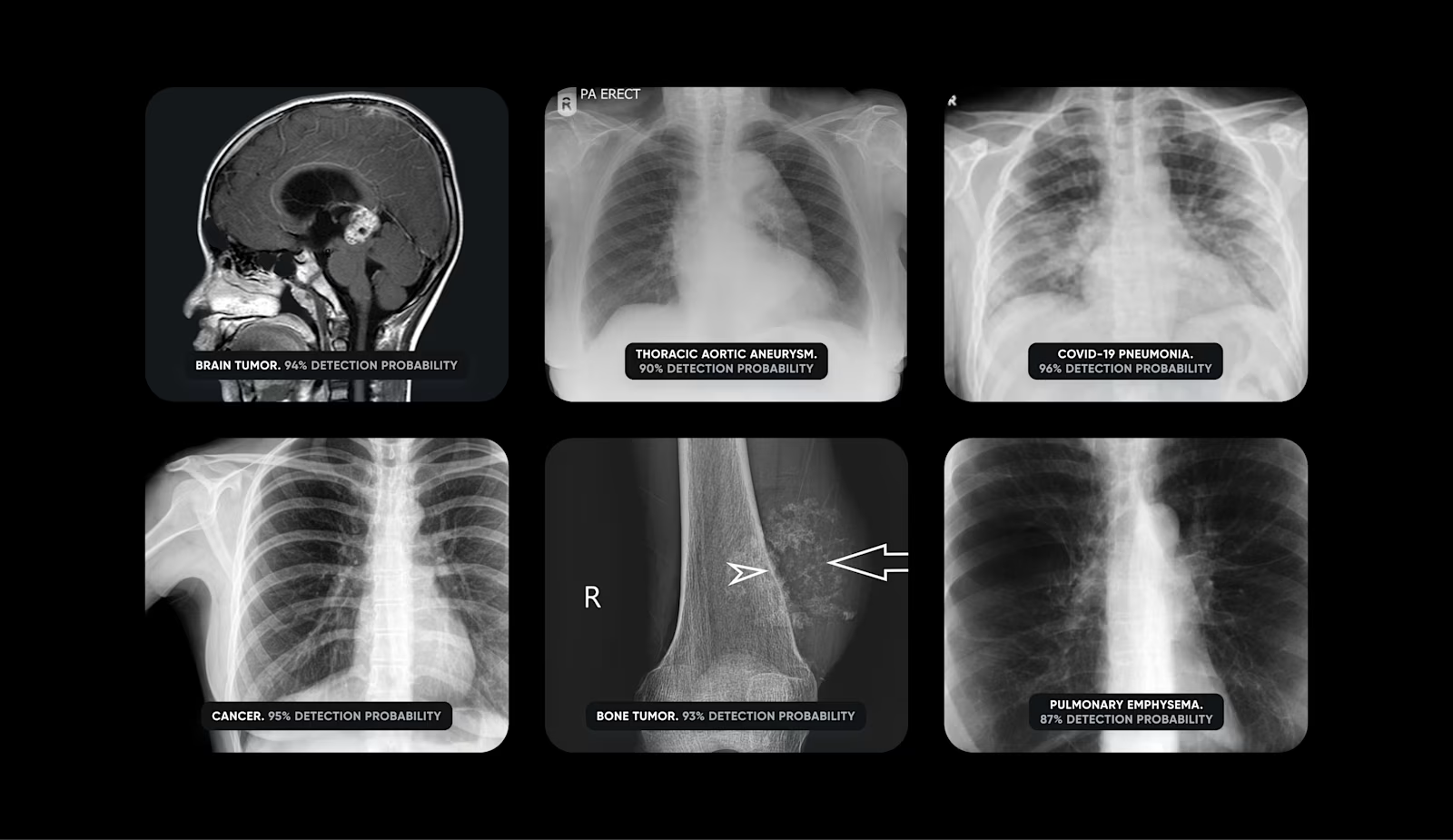
Most modern AI models, specifically deep learning algorithms, can be trained to analyze medical images with incredible speed and accuracy. By simply providing an image (a chest X-ray) to the previously trained AI system, it can effortlessly identify indicators of various conditions.
Today’s AI models for medical image classification can seamlessly detect signs of:
And these systems are not just fast; they are highly accurate, with experience showing that top models can achieve up to ~96% accuracy in identifying specific conditions, rivaling that of a human expert.
Scale. Human vs. AI.
To understand the impact even further, we’ve compared the process of analyzing medical images by a human radiologist versus an AI-augmented system.
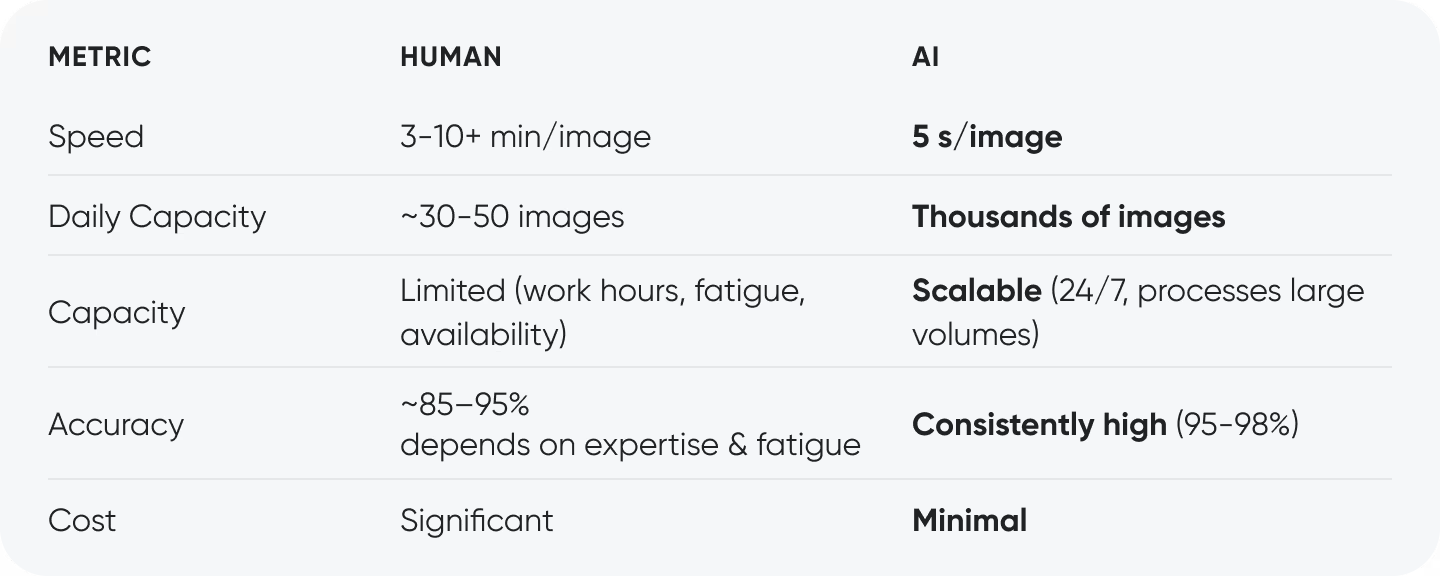
Over a month, a single radiologist analyzed a few hundred images. With each subsequent review, the risk of fatigue-related error increased. An AI system, on the other hand, could process that same volume in a matter of hours, with no degradation in accuracy.
Instead of burning out staff, we gave them a tool that improves focus, reduces errors, and allows more time for complex cases.
Impact.
Below is a quantitative pass of what happens if the AI does the primary read on every study (~98 % standalone accuracy), and 10 radiologists (10 FTE) only double-check and sign off.
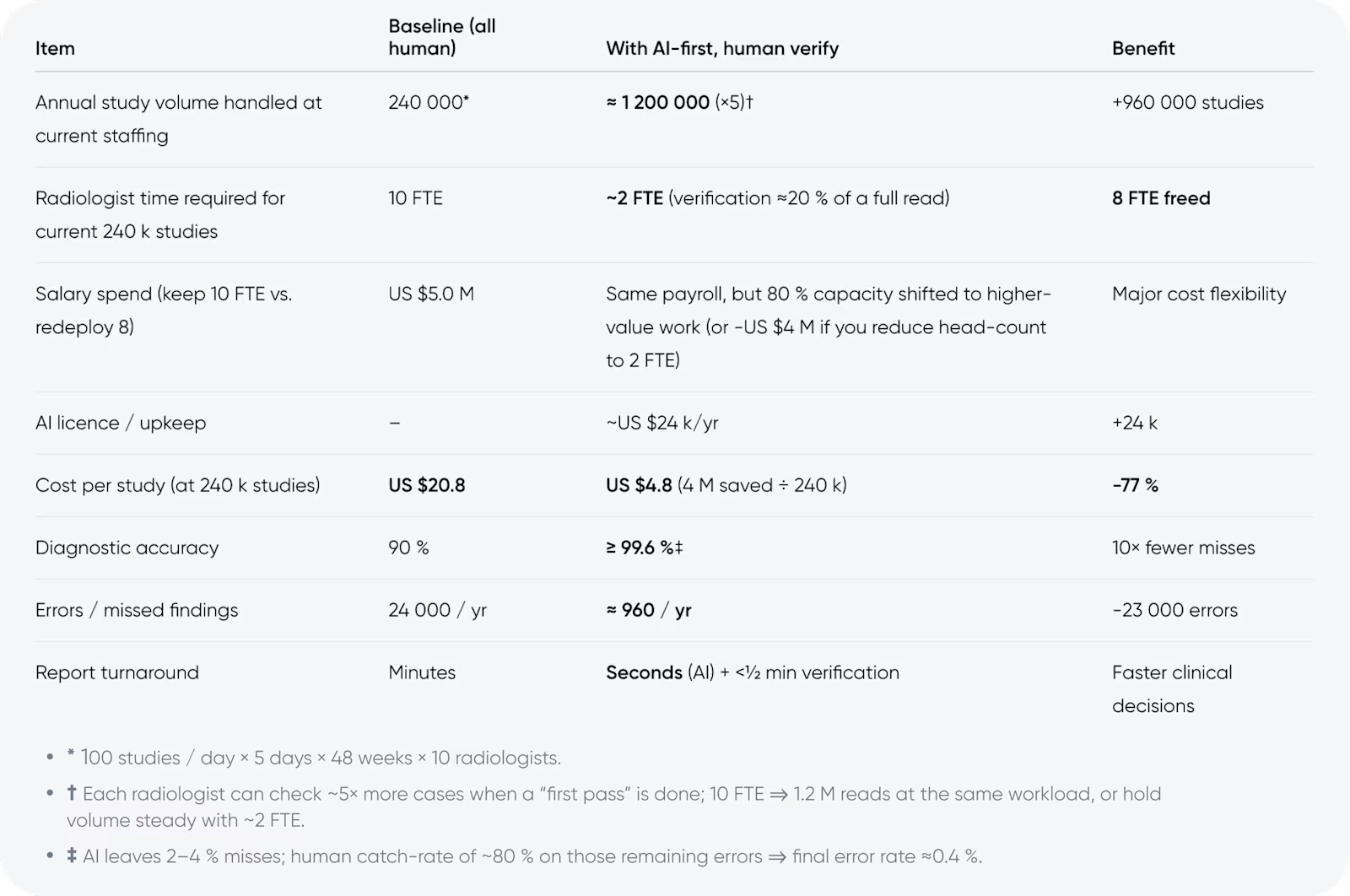
This wasn’t just a technical win — it was a business transformation.
For the tech-savvy.
To unravel the technical complexity of AI analyzing medical images and provide you with a better technical sense, let’s explore one of the most common diagnostic tasks: the analysis of chest X-rays to detect inflammatory processes, such as Viral Pneumonia and COVID-19.
For training and demonstrating such AI capabilities, publicly available datasets containing thousands of expert-labeled chest X-ray images were used.
Conceptually, the AI classification process can be visualized as follows:
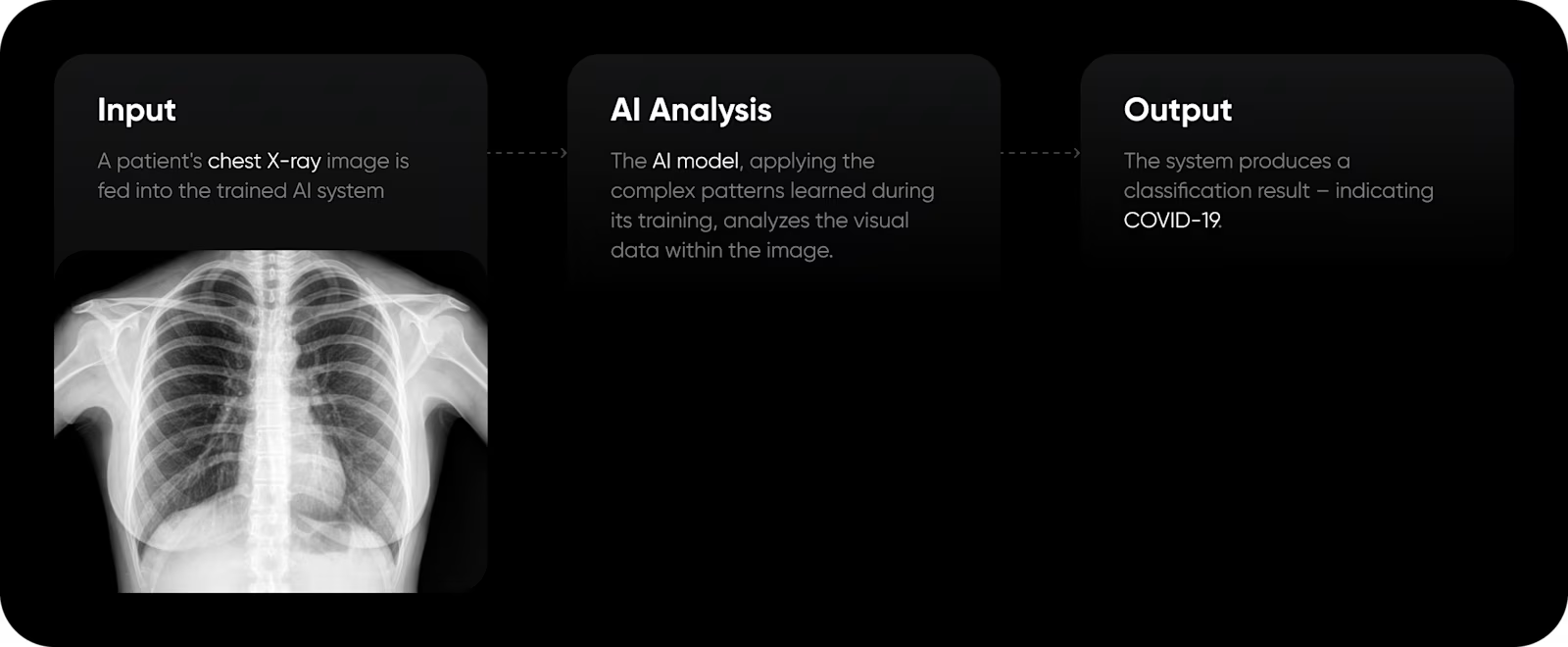
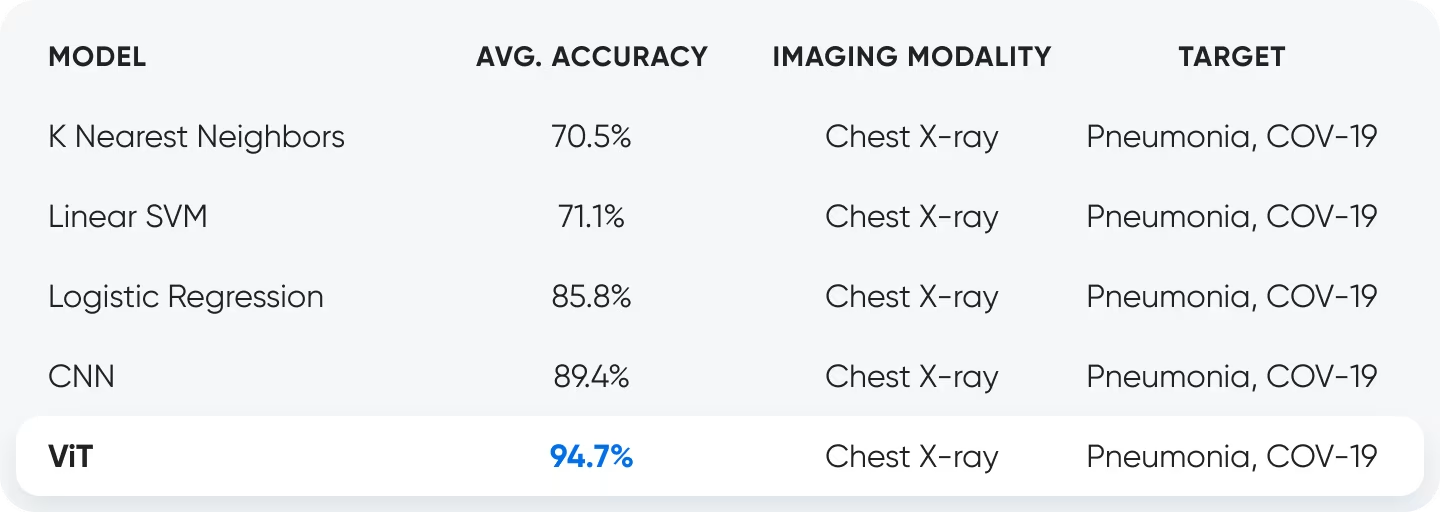
To determine the most effective approach for this task, we conducted a comparative analysis of several machine learning (ML) models. Our goal was to find the best-performing “engine” for our AI system. We started by establishing a baseline with classical algorithms and then moved to state-of-the-art deep learning architectures designed specifically for computer vision.
We evaluated each model on its ability to accurately classify the X-ray images. Here is a summary of our findings:
For more insights on model training, false positive rates, deployment costs, and implementation hurdles, please reach out to us.
Conclusion.
The takeaway for business owners is clear: automation and AI are no longer futuristic concepts; they are practical tools for solving today’s most pressing business challenges. For our client, AI transformed a critical bottleneck into a competitive advantage. It solved their scaling problem, reduced costs, improved quality, and ultimately fueled significant business growth.
Thinking about scale? If you’re facing challenges with operational efficiency, diagnostic load, or AI integration, let’s talk. We offer free consultations to explore how custom AI solutions can drive real, measurable impact in your organization, whether in healthcare or beyond.