

The Mass Updates device fleet console on a desktop display.
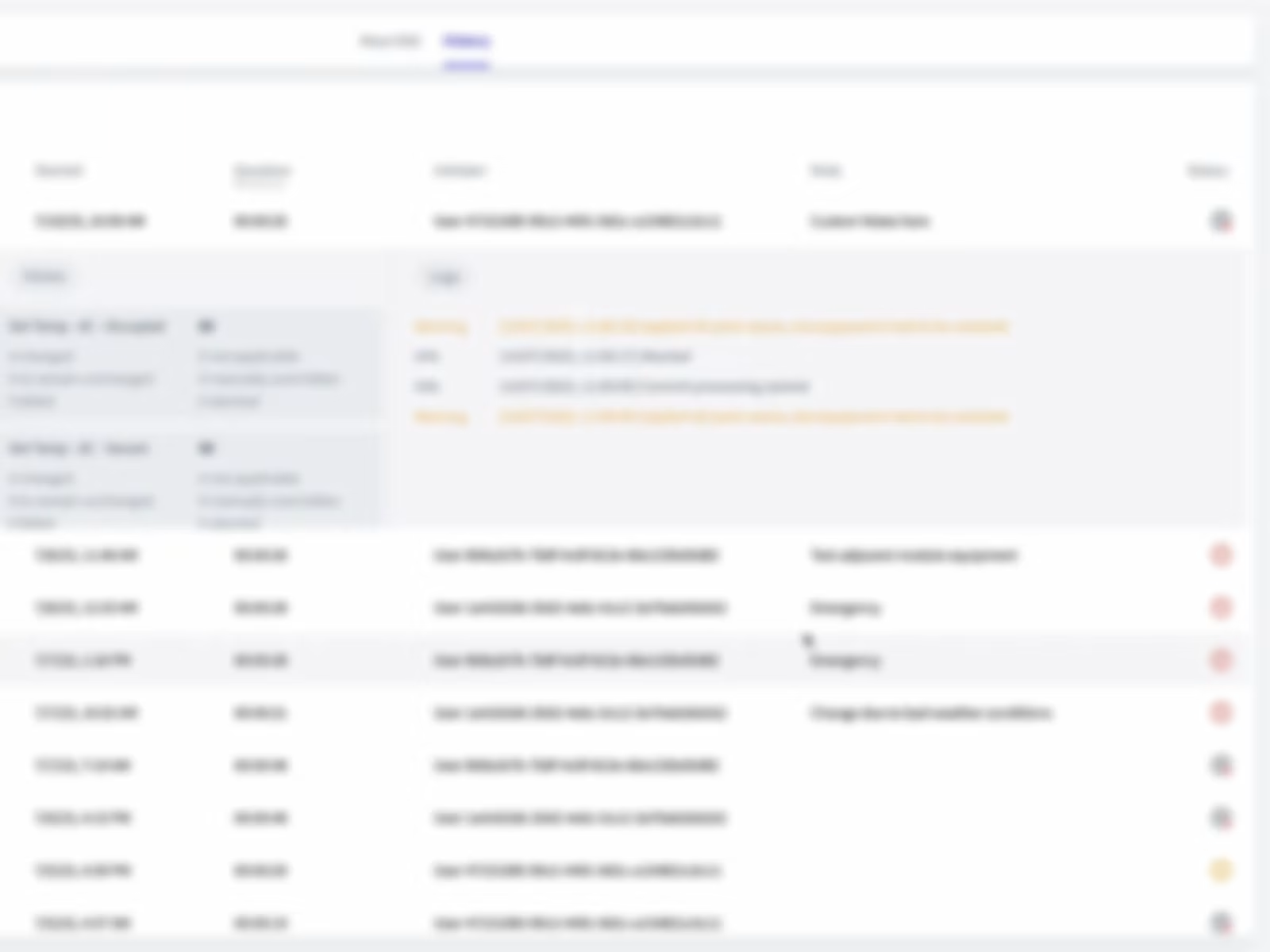
The Mass Updates device list with per-device status detail.
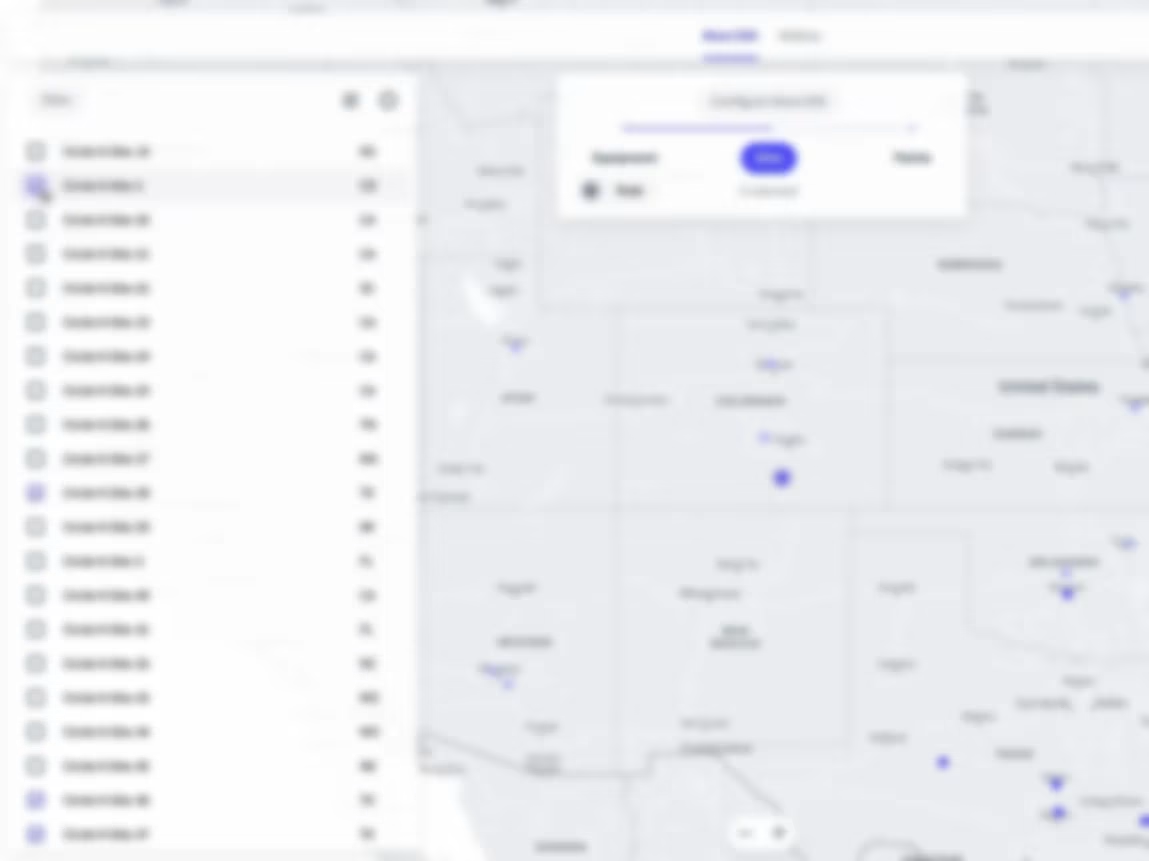
Map-based US site selection in Mass Updates.
The Mass Updates real-time monitoring dashboard.
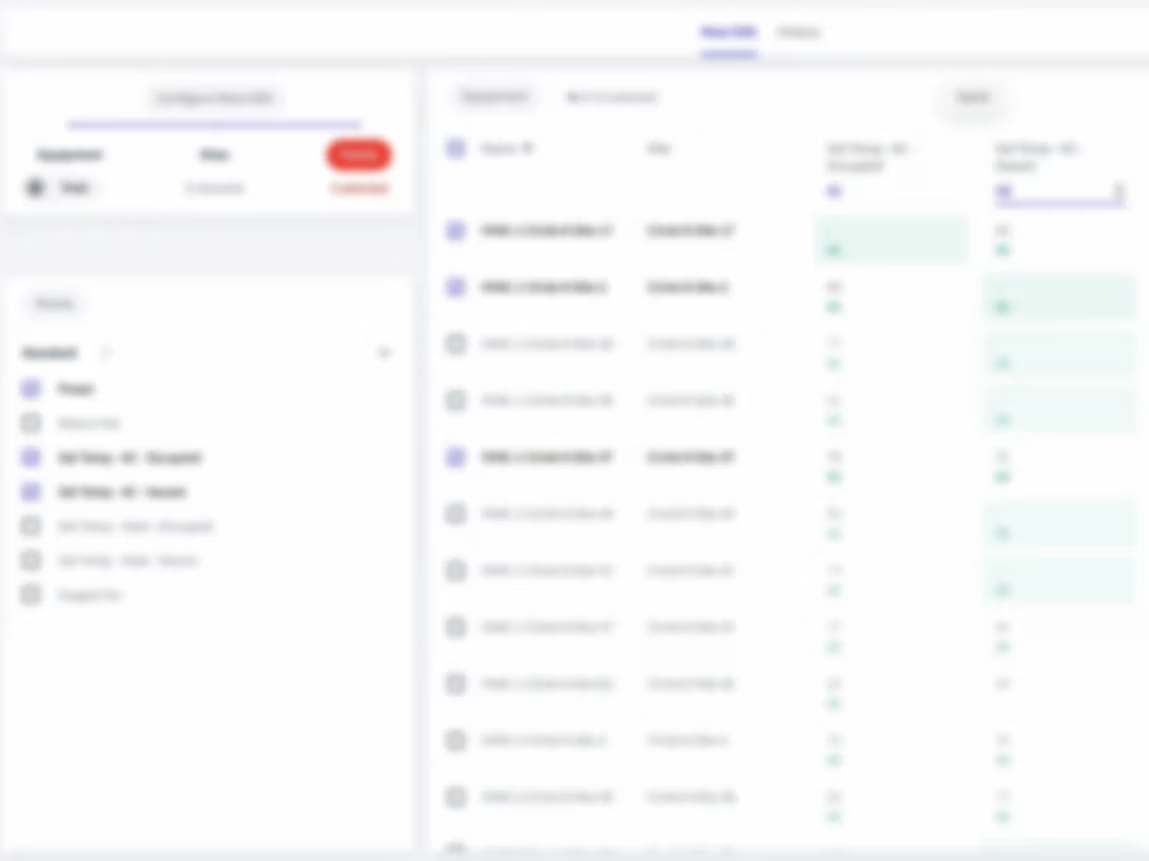
A Mass Updates rollout configuration panel.
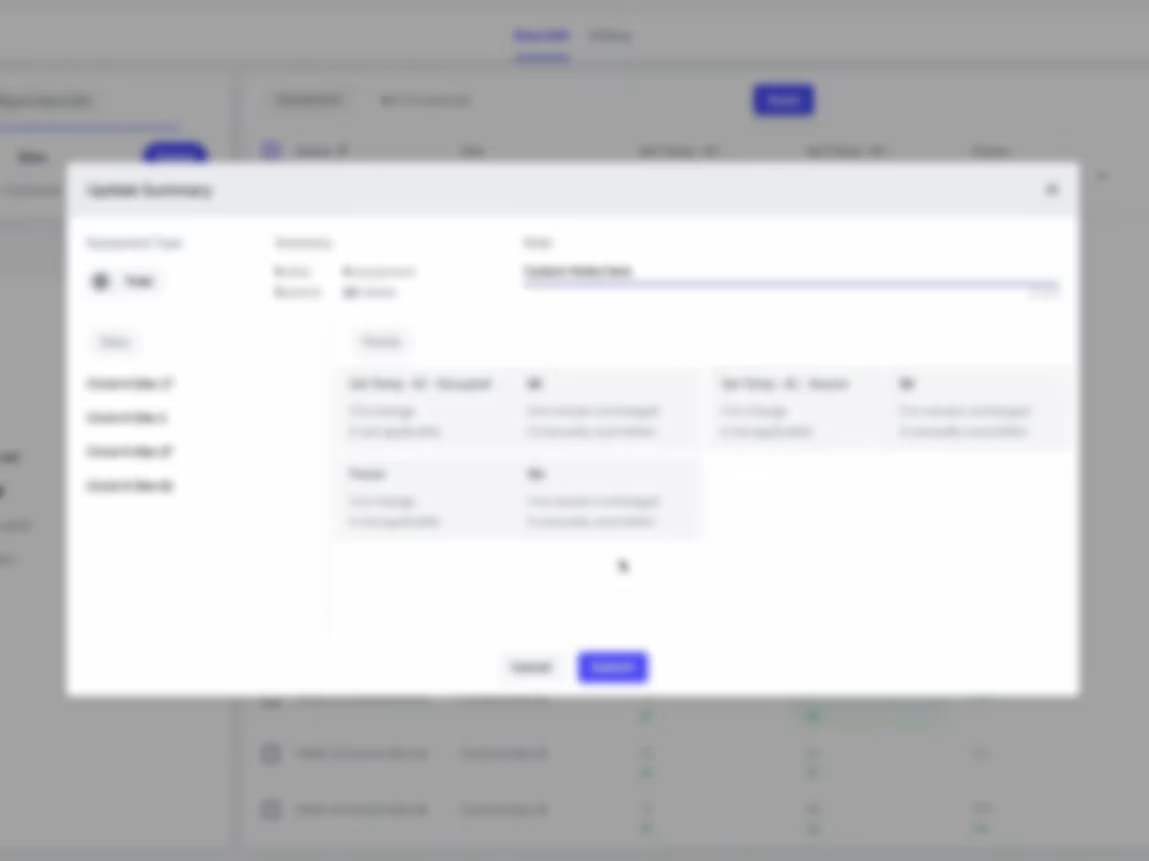
A Mass Updates device grouping and targeting view.
Mass Updates batch job logs and statuses.
Mass Updates
B2B, Proptech, IoT, Facility Management

Bulk update engine for nationwide IoT device fleets.

IoT mass update engine for a Fortune 1000 facility management company (“Smart Buildings”). Enables remote bulk control and configuration updates across tens of thousands of HVAC, lighting, refrigeration, and security devices nationwide. An operational command center for IoT fleet management — the core complexity is distributed systems orchestration, fault tolerance, and recovery at scale, not UI/UX.

platformWeb, PWA
verticalsB2B, Proptech, IoT, Facility Management
team & duration~5 FTEs, ~7 months
Under NDA.

This client is bound by a non-disclosure agreement, so names, visuals and figures on this page are obfuscated. Need more detail? Reach out and we'll share what we can.

Challenge.

Smart Buildings needed to push bulk configuration updates to 5,000–10,000 devices simultaneously across the US over unreliable networks, with full traceability and SLA compliance. Specific pain points: fragmented low-level device APIs (Buggy, Niagara, Ecobee, BAS), no centralized control plane, no rollback/recovery mechanisms, poor logging and auditability, no ability to merge concurrent updates, and triggers driven by weather, emergencies, and corporate decisions requiring fast response.

Solution.

“Generation 2.0” mass updates engine — a centralized microservices-based system featuring Kafka-based reliable message delivery for fault-tolerant bulk operations, a business logic layer abstracting heterogeneous device APIs into a unified control experience, recovery/resumption and revert/restart capabilities, update merging for concurrent changes, and an admin monitoring UI with real-time logs, batch reset, and map-based US site selection.

Impact.

Update success rate
+95%
Time to complete updates
-70%
Downtime
-50%
Operational efficiency
+60%
Tour reliability
99.5%

LTV/retention/conversion/CAC/UX breakdown:

LTV: Directly increased — the capability became a competitive differentiator, helping Smart Buildings win new contracts.

Retention: Client returned to Reliqio a year later for a second project (floor plan app).

Conversion: Not directly applicable as an internal tool, but the module strengthened Smart Buildings' sales pitch to their own prospects.

CAC: No data available.

UX: Operators went from fragmented manual processes to a single UI handling thousands of devices per update — job definition, scheduling, storage, reuse, and real-time monitoring in one place.

Features.

1
Map-based US site selection with filtering. Bulk device update execution (5K–10K devices)
2
Job definition, storage, scheduling, and reuse
3
Real-time monitoring dashboard (logs, timestamps, statuses)
4
Batch reset and error recovery. Update revert and restart.
5
Update merging (concurrent change handling)
6
Reliable message delivery over unstable networks.
7
Recovery and resumption after connection drops.
8
Comprehensive logging and audit trail

Technologies and integrations.

.NET
Kafka
PostgreSQL
BigQuery
Elasticsearch
GCP
React
MUI
Mapbox
Buggy
Niagara
Ecobee
Figma